
How Augmented Reality (AR) is Increasing Conversion Rates in Retail Apps
The way people shop has changed, but one challenge has remained constant: customers hesitate when they cannot fully trust what they see online.
No matter how well-written a product description is or how polished the images look, buyers still ask themselves:
“Will this actually look good on me?”
“Will this fit my space?”
“Is this worth the money?”
This hesitation is exactly where augmented reality in retail apps is quietly transforming the game.
Instead of asking customers to imagine, AR allows them to experience the product before buying, and that single shift, from imagination to experience, is what drives higher conversions.
Let’s explore how.
The Real Problem Behind Low Conversion Rates
Before understanding AR’s impact, it’s important to look at the core issue in retail apps:
Lack of physical interaction
Uncertainty about product fit, size, or appearance
High return rates due to mismatched expectations
Decision fatigue caused by too many options
While traditional e-commerce attempts to compensate with enhanced images, videos, and customer reviews, these solutions still prove insufficient.
AR solves this problem at a deeper level and removes doubt.
What Makes AR So Powerful in Retail?
At its core, augmented reality for e-commerce blends digital products into a user’s real environment. Instead of viewing a product on a screen, users see it in their own space, on their own body, or in real time.
This creates three powerful psychological triggers:
Confidence: “I know how it looks now.”
Control: “I can try it myself.”
Connection: “This feels like mine already.”
And these triggers directly influence buying decisions.
1. “Try Before You Buy” Eliminates Purchase Anxiety
One of the biggest reasons people abandon carts is uncertainty.
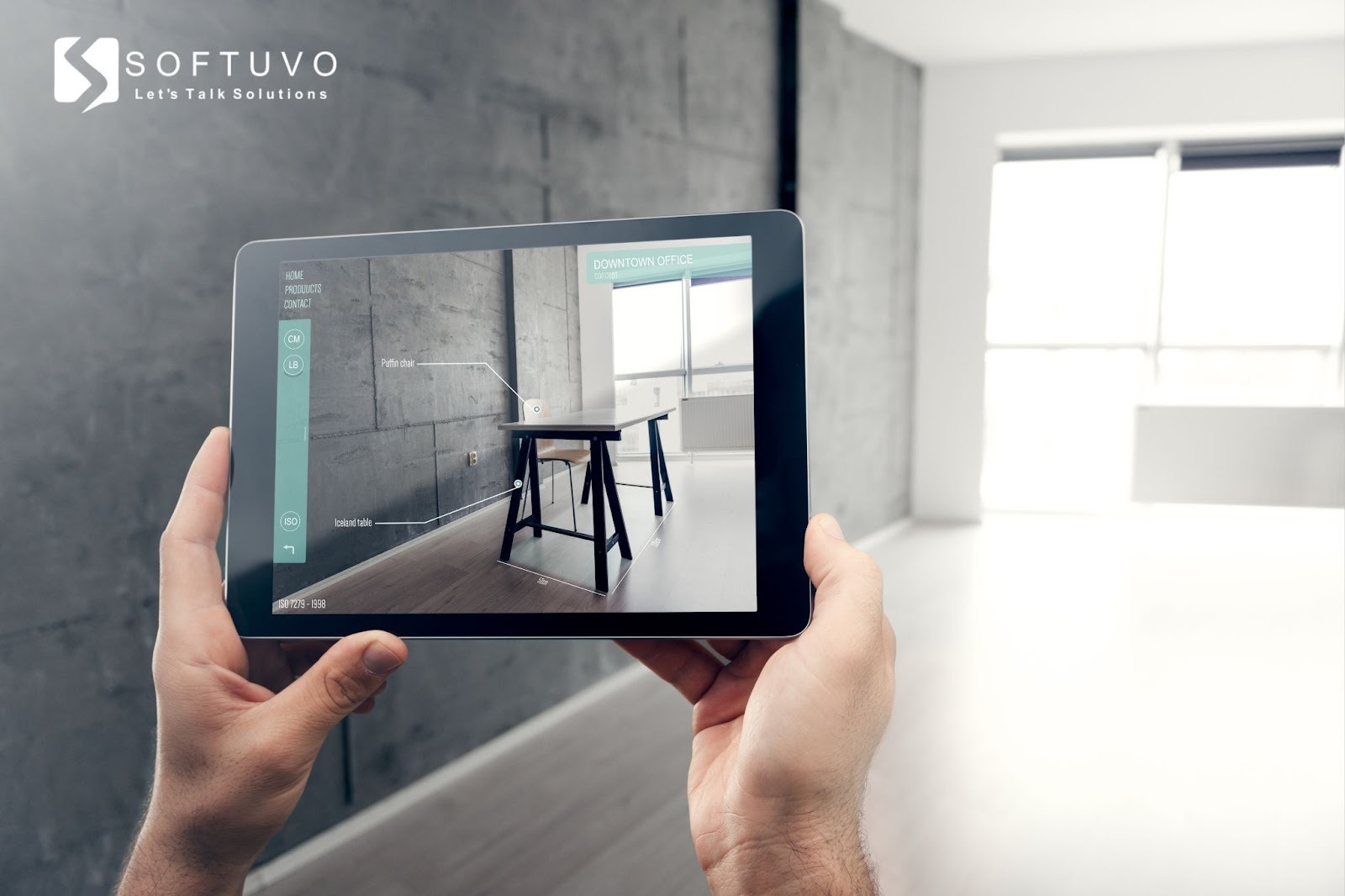
AR removes that by allowing users to:
Place furniture in their room
Try on clothes, glasses, or makeup virtually
Visualize gadgets or décor in real environments
When users can see exactly how a product fits into their life, hesitation drops.
Impact:
Reduced cart abandonment
Faster decision-making
Higher purchase confidence
This is one of the strongest reasons why augmented reality shopping apps are outperforming traditional apps in engagement and conversions.
2. AR Creates a Sense of Ownership Before Purchase
There’s a classic psychological principle: People value things more when they feel ownership, even before buying.
AR activates this effect beautifully.
When a customer places a virtual sofa in their living room or tries on a pair of sunglasses, something subtle happens:
The product stops being “a product.”
It becomes “my sofa” or “my look.”
This emotional connection significantly increases the likelihood of purchase.
Impact of AR on retail sales:
Customers are no longer browsing; they are already experiencing ownership.
3. Reduced Returns = Increased Profitability
Returns are one of the highest hidden costs in e-commerce.
Customers often return products because:
The size didn’t match expectations
The color looked different
The product didn’t fit the intended space
AR directly addresses these issues by providing real-world visualization before purchase.
When customers know what they are getting:
They make better decisions
They are less likely to return items
Result:
Lower return rates
Higher customer satisfaction
Better profit margins
This is a practical and measurable impact of augmented reality for e-commerce, not just a theoretical benefit.
4. AR Increases User Engagement Time
Traditional apps rely on scrolling.
AR-based apps invite interaction.
Instead of passively browsing, users:
Rotate products
Place them in different environments
Experiment with variations
This transforms shopping into an experience.
And when users spend more time engaging with a product:
Their interest deepens
Their likelihood of buying increases
More engagement = more conversions
5. Personalized Shopping Experience at Scale
Modern users expect personalization. AR delivers it in a highly intuitive way.
Instead of showing generic recommendations, AR allows:
Personalized product previews
Context-based visualization
Real-time customization
For example:
A user sees how a chair fits in their room, not a showroom
A user tries lipstick shades on their face, not a model
This level of personalization makes users feel understood, and when users feel understood, they buy.
6. Builds Trust in Digital Shopping
Trust is the foundation of conversion.
AR helps build trust by:
Providing realistic previews
Reducing the mismatch between expectation and reality
Offering transparency in product visualization
AR shows products in real life, unlike edited photos or staged product images.
7. AR Bridges the Gap Between Online and Offline Retail
Physical stores have always had one big advantage: the ability to see and try products in real life.
AR brings that same advantage into digital platforms.
It combines:
The convenience of online shopping
The confidence of offline experiences
This hybrid experience is exactly what modern consumers prefer.
Real-World Use Cases That Drive Conversions
Let’s look at how different industries are using AR effectively:
Furniture & Home Decor
Users place furniture in their homes before buying, which eliminates guesswork about size and aesthetics
Fashion & Accessories
Virtual try-ons for clothes, sunglasses, and jewelry eeduces uncertainty about style and fit
Beauty Industry
Makeup trials using AR filters help users choose the right shade instantly
Retail & Grocery
Interactive product previews and packaging visualization enhance product understanding
These examples show that augmented reality in retail apps is not just a fad; it's becoming the norm.
The Business Impact: Why Retail Brands Are Investing in AR
Companies are using AR not just to be cutting-edge, but also because it works.
Here’s what companies are seeing:
Increased conversion rates
Higher average order value
Reduced product returns
Better customer engagement
Stronger brand differentiation
These benefits are not optional in a market where there is a lot of competition; they are necessary.
Where Softuvo Fits In
As businesses look to integrate AR into their retail ecosystems, the real challenge is not why to use AR, but how to implement it effectively.
This is where a technology partner makes all the difference.
Softuvo focuses on building custom digital solutions that are not only functional but also conversion-driven. From user-centric design to scalable app development, the goal is to create experiences that users trust and businesses can grow with.
For retail brands, this means:
Seamless AR integration
High-performance mobile apps
Intuitive user experiences
Scalable e-commerce solutions
Because AR alone is not enough, the execution defines the results.
The Future of AR in Retail
AR is still evolving, but its direction is clear.
In the coming years, we can expect:
More realistic and immersive AR experiences
Integration with AI for smarter recommendations
Web-based AR (no app downloads required)
Wider adoption across small and mid-sized businesses
Retail will no longer be about browsing; it will be about experiencing before buying.
Final Thoughts
The success of any retail app depends on one simple factor: how confident the customer feels before clicking “Buy Now.”
Augmented reality changes that confidence completely.
By removing uncertainty, increasing engagement, and creating emotional connections, AR turns hesitant users into confident buyers.
That’s why the impact of AR on retail sales is not just noticeable; it’s transformative.
If retail once relied on touch and feel, AR ensures that digital shopping doesn’t lose that advantage; it simply reinvents it.